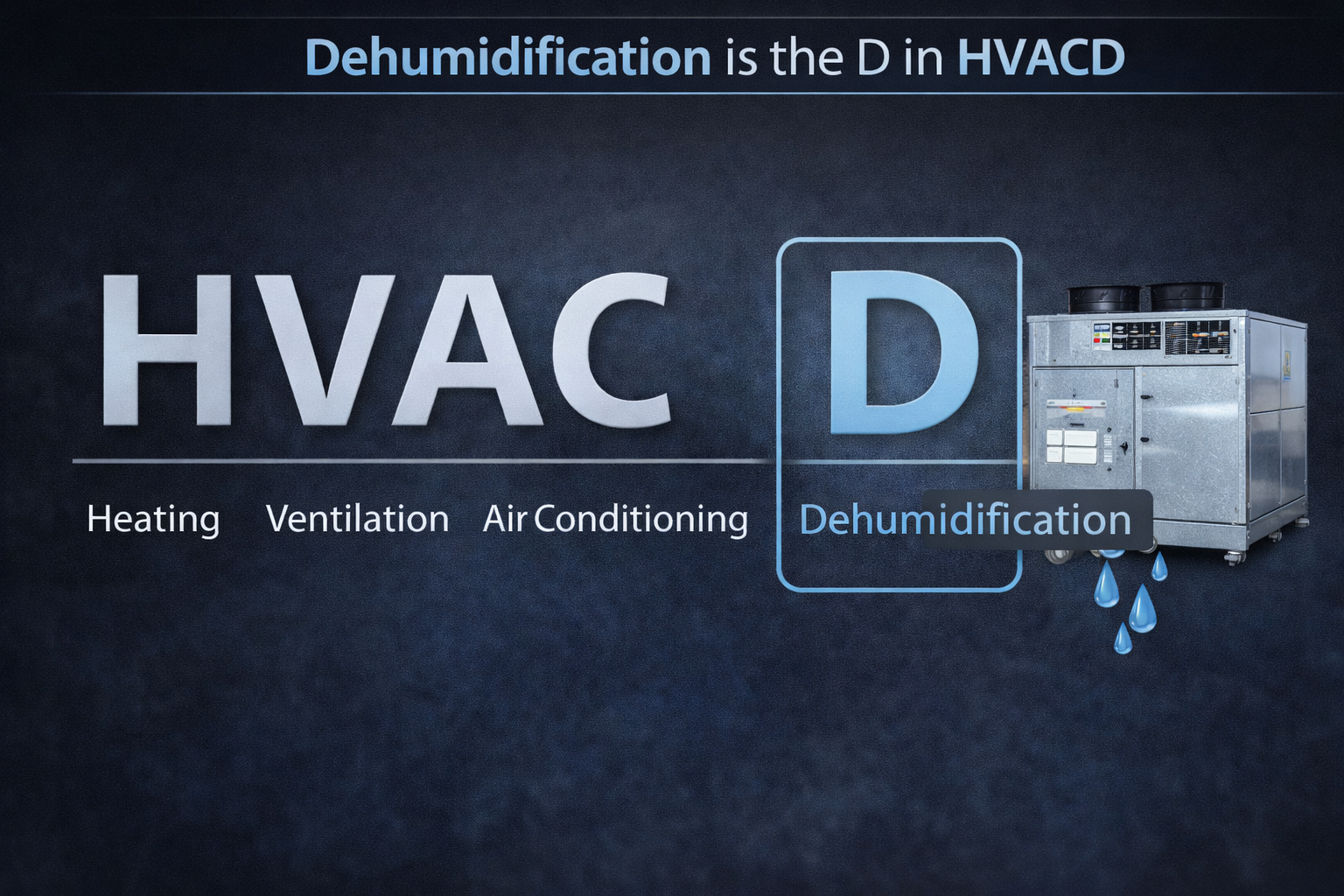
The invisible force that governs transpiration, drybacks, pathogen growth and crop steering
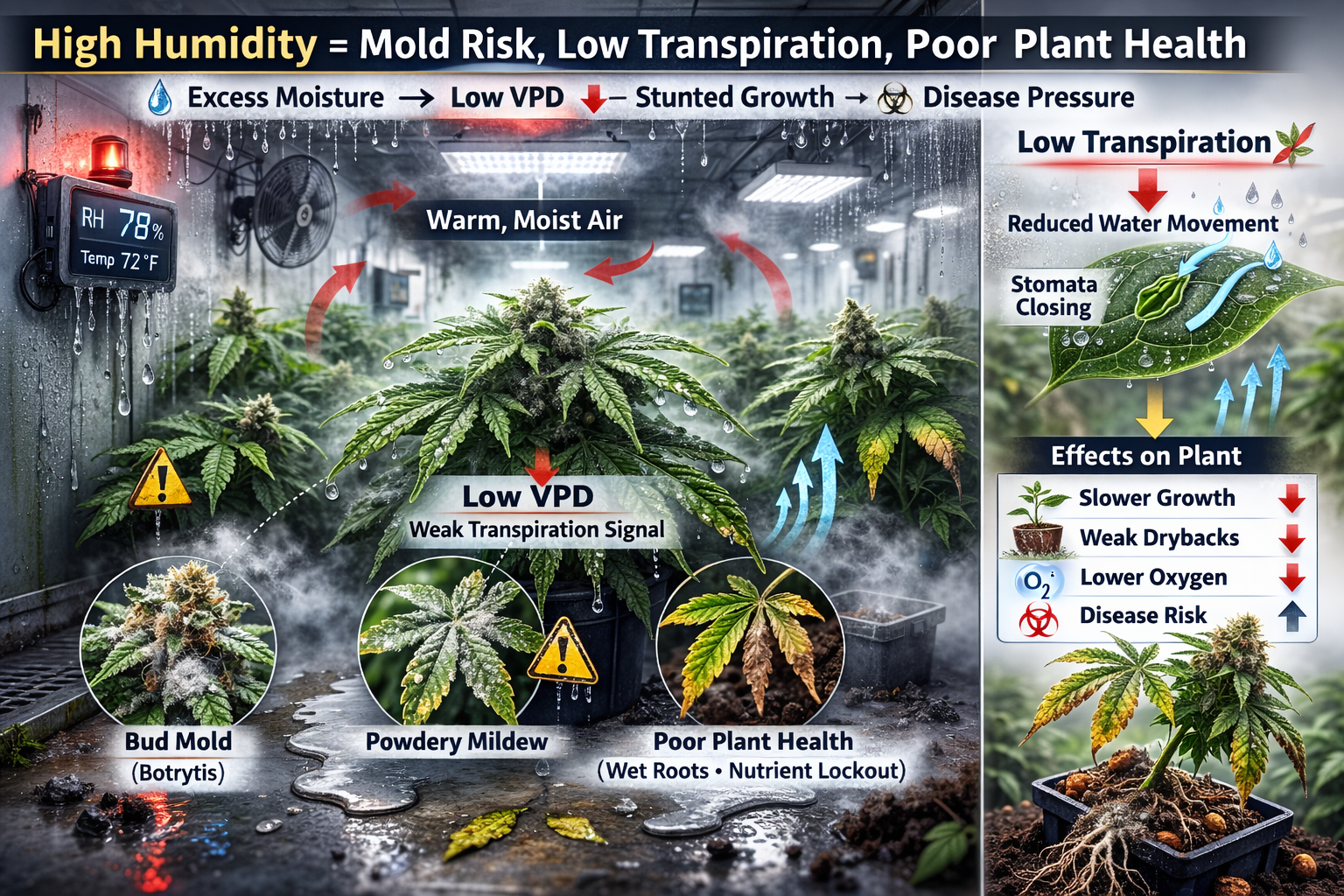
If airflow makes the room behave like one environment, humidity makes the plant behave like one plant. Humidity is not a comfort metric. It is not a background number. It is one of the most powerful governors of plant throughput, nutrient movement, dryback execution, disease pressure, and consistency of expression. In an indoor cannabis facility, water leaving the leaf is not a side effect of growth. It is the process that supports growth. Transpiration moves water from the root zone through the xylem and out through the stomata, carrying nutrients, driving cooling, and helping the plant keep pace with light and CO₂. That means humidity control is not passive environmental management. It is active crop steering.
This is why humidity deserves to be treated as a cardinal terroir parameter. You can apply more photons, enrich CO₂, and design better irrigation strategies, but if the room cannot create space in the air for water to leave the plant, the biology stalls. When the air becomes too wet, transpiration slows, nutrient movement becomes less predictable, media remains wetter for longer than intended, and the root zone begins to behave differently than the grower planned. A facility that cannot control humidity at the rate moisture is being generated will always struggle to turn environmental intention into repeatable plant behavior.
Humidity is best understood through dew point and VPD, not RH alone
Most growers still talk about relative humidity because that is what the sensors display by default. RH is useful, but it is incomplete. Relative humidity changes whenever temperature changes, even if the actual amount of moisture in the air has not changed. That makes RH an unstable lens by itself. The more useful framing is to interpret humidity through both dew point and vapor pressure deficit. Dew point tells you how much water is actually in the air. VPD tells you how strongly the air is asking the plant to transpire. Together, they connect mechanical performance to plant response.
Dew point is especially important because it cuts through what many growers experience as “RH illusions.” If room temperature changes, RH can move dramatically without a meaningful change in absolute moisture load. Dew point lets operators compare rooms more honestly, diagnose latent capacity problems more clearly, and understand whether the system is actually removing water or simply moving the room around a different dry-bulb temperature. VPD, by contrast, is the plant-facing result of temperature and humidity interacting at the leaf surface. It is not something you directly control; you control temperature and moisture, and the plant experiences the resulting vapor-pressure gradient. That is why leaf temperature matters. Room-temperature VPD is useful, but leaf-temperature VPD is better because it is closer to the actual evaporative reality of the crop.
Humidity is a crop-steering tool because it controls the plant’s ability to dry back
Crop steering is often described through irrigation timing, shot size, and substrate water content, but those strategies only work when the room allows the plant to transpire predictably. Aroya’s crop-steering framework explicitly ties steering to climate, root-zone behavior, and irrigation working together, not independently. Their dryback guidance also makes the key point that there is no universal dryback number, because substrate type, cultivar, temperature, humidity, and light all change the way water moves through the system. Dryback is measured as a real drop in volumetric water content, and the room climate is one of the main factors that determines whether that dryback occurs on schedule.
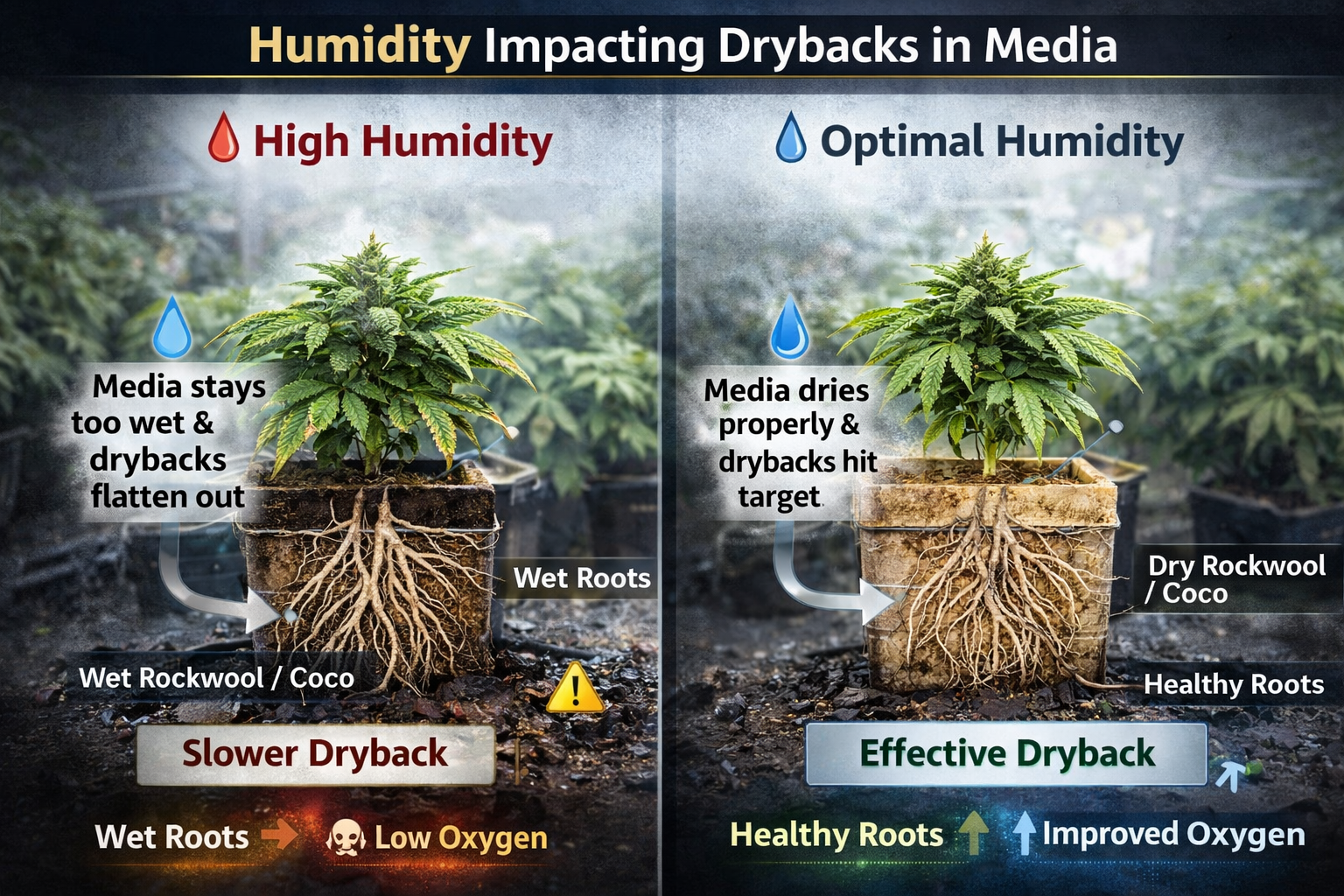
That is the practical insight many teams miss: humidity is what creates room for the dryback to happen. Rockwool and coco can both be steered, but they behave differently. Rockwool is highly uniform and lends itself well to precision steering because water content and oxygen availability can be manipulated with a high degree of consistency. Coco can also be steered successfully, but because its structure and water-holding behavior differ, the exact timing and amplitude of drybacks can differ as well. In both cases, however, the room has to accept the transpired water or the substrate will not dry as intended. The irrigation schedule may be perfect on paper and still fail in practice if dehumidification cannot keep up.
The operating truth: dehumidification dictates irrigation freedom
This is one of the most important lines in the whole article: your dehumidification capacity dictates your irrigation freedom. If the room cannot reliably remove the water the plant is trying to transpire, the plant cannot maintain the level of movement required to execute an aggressive steering strategy. Drybacks flatten out. Media stays wetter. Root-zone oxygen decreases. Nutrient movement slows. The plant stops keeping pace with your light and CO₂ inputs. Growers often respond by adjusting irrigation, cutting shots, changing runoff targets, or blaming substrate behavior, when the upstream bottleneck may actually be environmental moisture removal.
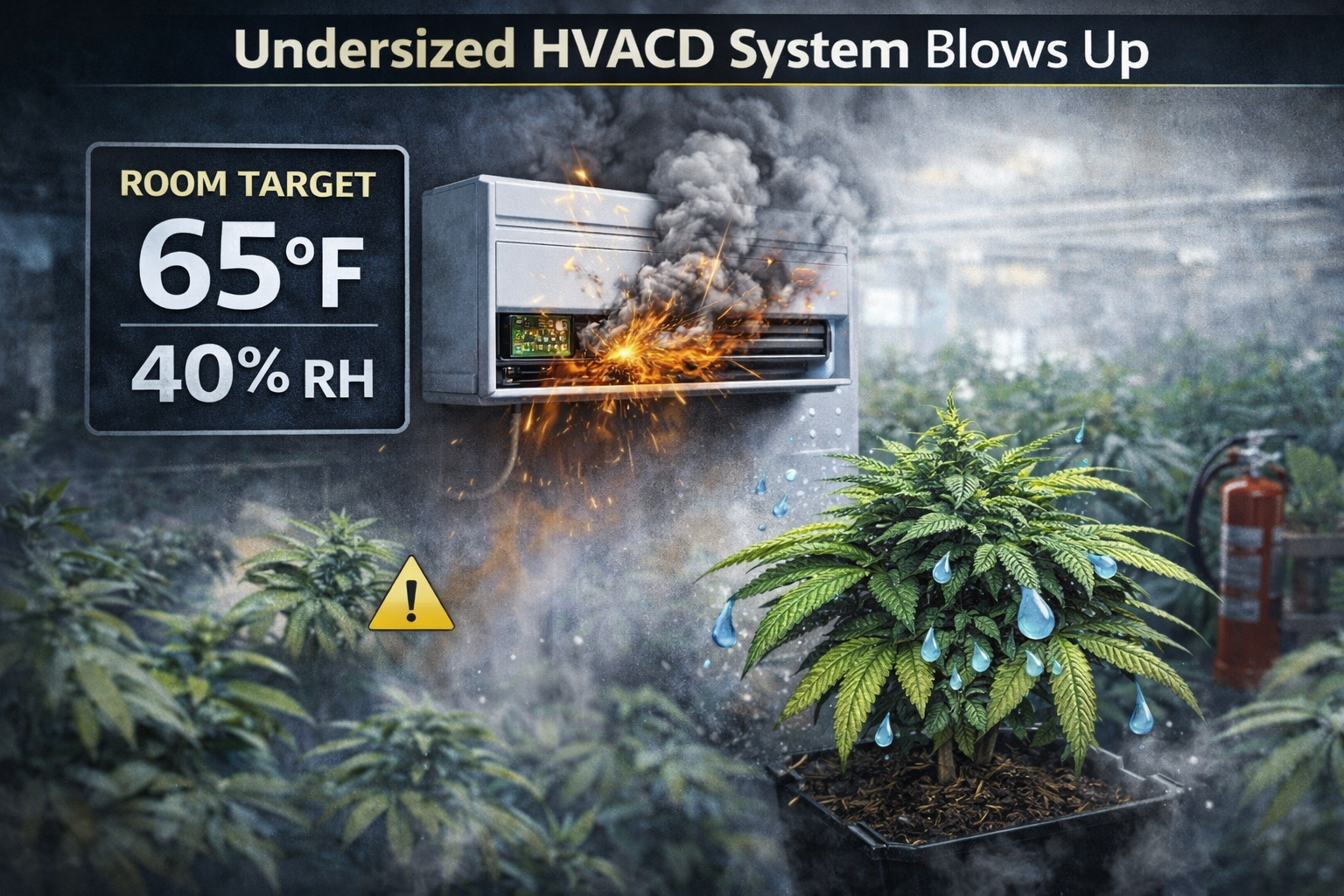
This is where humidity stops being a “quality” issue and becomes a throughput issue. If you want to use light and CO₂ aggressively, water movement through the plant has to keep up. That means the room must be able to absorb and remove water vapor as fast as the biology produces it. The latent load is not optional. It is the direct result of plant activity. So when dehumidification is undersized, unstable, or poorly controlled, the crop is effectively forced to slow down to match the room’s limitations.
What realistic stage targets look like
There is no single humidity recipe for all cannabis, but there are defensible ranges that line up with commercial steering practice. Aroya’s educational guidance points growers toward higher humidity early, then gradually drier targets as plants move deeper into flower. Their office-hours guidance summarizes a common practical range of roughly 50–70% RH in vegetative growth and 40–50% RH in late flower, while their broader indoor cultivation guidance suggests very high humidity for germination and early rooting. Separate industry guidance from MMJDaily aligns closely, suggesting roughly 65–70% RH for clones and seedlings, 60–70% RH in vegetative growth, and progressively lower humidity later in flower.
From a crop-steering standpoint, a useful framework looks like this. In propagation and early rooting, high humidity is supportive because the plant has limited root capacity and benefits from reduced evaporative demand. In vegetative growth, humidity can remain moderately elevated to support expansion and establishment, but should still be managed so that the plant is actively moving water. Through transition and bulk flower, the room usually needs to become progressively drier so transpiration can support stronger drybacks and a more generative response. In late flower, humidity generally moves lower still, not because the goal is simply to “dry the room out,” but because dense flowers, higher microbial consequence, and the need for reliable finishing behavior demand tighter dew-point control and stronger protection against localized wet pockets.
Aroya also notes that the generative phase often uses slightly higher temperatures and slightly higher humidity, followed by lower humidity and somewhat higher VPD through the bulking phase. That is a valuable nuance: humidity steering is not only about making the room drier over time. It is about using the right combination of heat, moisture, and irrigation strategy to get the plant response you want in that phase. This is why rigid RH charts without stage context often mislead growers. The target is not a number. The target is a physiological response.
Drybacks: 30% and 40% are real, but only when the room can support them
The 30% and 40% dryback discussion is important because these numbers get repeated constantly in the industry. Aroya’s dryback guide confirms that dryback is often tracked as an actual percentage drop in substrate moisture content, such as going from 50% VWC to 20% VWC for a 30% dryback. But they also emphasize that there is no universal correct dryback percentage. The “right” dryback depends on cultivar sensitivity, substrate behavior, and environmental conditions, including humidity.
That means 30% or 40% drybacks are not magic numbers. They are outcomes that require sufficient transpiration, adequate root-zone oxygen, and enough latent capacity in the room to let water leave the plant and the substrate on schedule. In rockwool, because the medium is more uniform and measurable, growers often push more aggressive steering strategies with greater confidence. In coco, the strategy can still be effective, but medium behavior and sensor interpretation may differ. Growlink’s TerraLINK positioning is useful here because it highlights a real operational pain point: sensors and steering decisions need to remain reliable even under high EC and aggressive dryback conditions. That tells you something about the real-world intensity of modern steering programs, especially when cultivators are trying to force consistent crop behavior at scale.
Late flower is where humidity mistakes get expensive
Humidity mistakes in late flower are not minor agronomic misses. They are direct business risks. As flowers densify, the canopy becomes harder to ventilate internally, localized microclimates become more consequential, and wet zones inside flowers carry much greater microbial and economic consequence. This is why experienced growers become far less tolerant of dew-point drift and humidity swings late in the cycle. The room may appear acceptable on average while still creating small pockets of risk inside the canopy that translate into mold pressure, quality loss, or failed testing.
Recent peer-reviewed cannabis work strengthens that concern. A 2025 study found that elevated canopy humidity outside optimal VPD thresholds delayed flowering and reduced biomass accumulation, while also negatively affecting cannabinoid concentration in the tested cultivar. That should get every operator’s attention. Humidity is not only a disease variable. It also influences timing, morphology, and chemical expression. When humidity is wrong, the crop can become slower, less uniform, and less commercially valuable.
Humidity swings create many rooms inside one room
One of the biggest misconceptions in cultivation is that a room with one humidity setpoint is one humidity environment. In reality, humidity distribution depends on airflow, canopy density, surface temperature, irrigation timing, and equipment behavior. A room can have acceptable average RH while still containing local zones where transpired moisture accumulates, dew point approaches surface temperature, or the canopy remains wetter than intended. Those are the places where pathogens, inconsistent ripening, and steering failures often begin.
Lights-off transitions are especially revealing. When transpiration patterns change and room temperature shifts, RH often spikes. If the system cannot recover quickly, the grower does not have a stable environment; they have a repeating daily event that stresses the crop and raises biological risk. This is part of why humidity control has to be dynamic and load-based. Moisture generation is not constant through the day, and it certainly is not constant through the cycle. Any design or SOP that treats humidity like a fixed, uniform building load is already behind the biology.
The facility itself may be contributing moisture

Plants are not always the only humidity source. Poor drainage, wet floors, standing water, porous surfaces, leaky penetrations, poorly insulated surfaces, and sloppy condensate management can all contribute to latent load or condensation risk. In a tight finishing room, those secondary moisture sources matter. If the room is supposed to behave like a controlled vessel, every uncontrolled source of moisture erodes that control. This is another reason envelope integrity and room hygiene belong in the humidity conversation. A dehumidification strategy can only be as sharp as the room it is trying to govern.
Why latent capacity is often underestimated
Temperature problems are obvious. Humidity problems can hide until the crop is large, dense, and expensive. That is one reason latent capacity is so often underestimated during design and operations. Dehumidification is also mechanically more complex than simple sensible cooling. Moisture has to be condensed out of the airstream by dropping air below its dew point, and then in many cases the leaving air has to be reheated or otherwise tempered so the crop is not shocked by overly cold supply air. That makes precision humidity control both energy-intensive and operationally demanding.
This is where the economics become real. If the system is not designed around latent performance, growers end up trying to patch the problem with stand-alone dehumidifiers, altered irrigation strategy, more fan activity, or conservative setpoints that pull back crop ambition to fit the room. Each of those responses has a cost. Sometimes it is capital cost, sometimes energy, sometimes labor, and often it is lost yield or reduced consistency. In that sense, humidity control is not an expense line. It is one of the main determinants of whether the rest of the production model actually cash-flows the way it was expected to.
Humidity steering is really transpiration steering
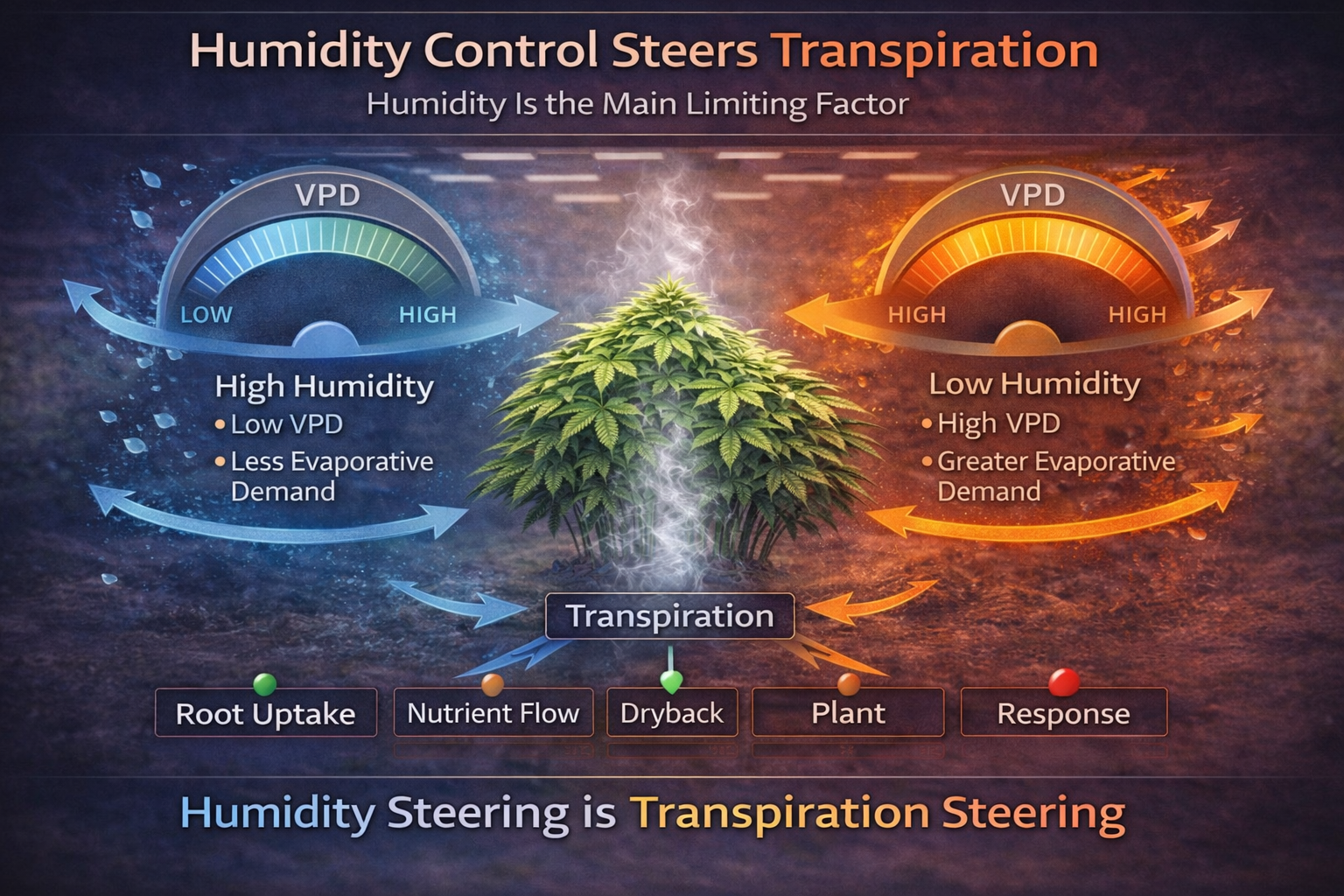
When growers say they are steering with humidity, what they are really doing is steering transpiration. Higher humidity lowers VPD and softens the plant’s evaporative demand. Lower humidity raises VPD and increases the drying power of the air. Used wisely, that helps the grower shape drybacks, root-zone oxygenation, nutrient mass flow, and developmental behavior. Used poorly, it can either suppress plant movement or create excessive stress. The Anden summary puts it plainly: when VPD is too low, the plant cannot release moisture efficiently enough to support root uptake and growth; when VPD is too high, the plant can transpire too rapidly.
That is why the most useful humidity conversation is not “what RH should I run?” but rather “what plant response am I trying to create in this phase, and what combination of temperature and humidity will create that response without destabilizing the crop?” That is a far more sophisticated question, and it is exactly why humidity belongs near the center of any serious indoor terroir discussion.
Practical measurement: how to stop steering by feel
Humidity should be measured like a system, not a vibe. At minimum, growers should track room temperature and RH in multiple locations, not just one sensor. Dew-point trend is worth watching because it reveals whether the room is actually accumulating moisture or truly shedding it. VPD should be calculated with leaf temperature when possible, not only ambient temperature. Root-zone water content, EC, and temperature should be measured directly if the facility is trying to run a serious steering program. This is exactly why Grodan, Aroya, and Growlink all center sensor-driven root-zone insight in their crop-steering ecosystems.
A practical operating dashboard should include irrigation volume in, runoff behavior, dryback rate by phase, daily maximum humidity, lights-off spike magnitude, and dehumidification runtime relative to setpoint stability. If the room continually creeps humid during peak transpiration, recovers too slowly at night, or refuses to achieve intended drybacks without aggressive irrigation cutbacks, those are signs that humidity control is weak upstream of the irrigation strategy.

The business conclusion
Humidity is not just about preventing mold. It is about protecting throughput. It determines whether light and CO₂ turn into real biomass, whether nutrients actually move through the plant the way the feeding program assumes, whether drybacks happen on time, whether late flower behaves predictably, and whether one room can consistently express one cultivar signature instead of many.
If airflow is the invisible input that makes the room act like one environment, dehumidification is the governor that makes the crop act like one performer. It is what creates the space for water to move, and water movement is what lets modern indoor cultivation keep up with its own ambitions. For growers chasing true indoor terroir, humidity is not a side parameter. It is one of the core forces that determines whether the room expresses potential or exposes limitation.