
HVAC Maintenance in Cannabis Cultivation: The Reality of Living with Climate Systems
Preventive maintenance in a commercial cannabis facility is not optional. It is foundational to crop quality, operational stability, and long-term profitability.
Among all the systems in a cultivation facility, HVACD infrastructure is the most critical to maintain. Environmental systems control temperature, humidity, airflow, and dehumidification—conditions that directly influence plant transpiration, nutrient movement, pathogen pressure, and ultimately yield and product quality.
Combined with lighting, HVACD systems represent the largest energy consumer in most cultivation facilities. When these systems are not maintained properly, energy consumption increases, environmental stability declines, and the risk of mechanical failure rises dramatically.
“Owning HVAC in a cultivation facility is like owning a fleet of race cars. They perform beautifully—until they don’t. And when they don’t, the repair bill and downtime can be devastating.”
The reality is simple:
Every mechanical system eventually fails.
The real questions are:
- Can you see failure coming?
- Can you prevent it?
- And how quickly can you fix it when it happens?
Understanding what HVACD ownership actually requires is essential for any cultivation operation.
The Reality of Operating HVACD Systems
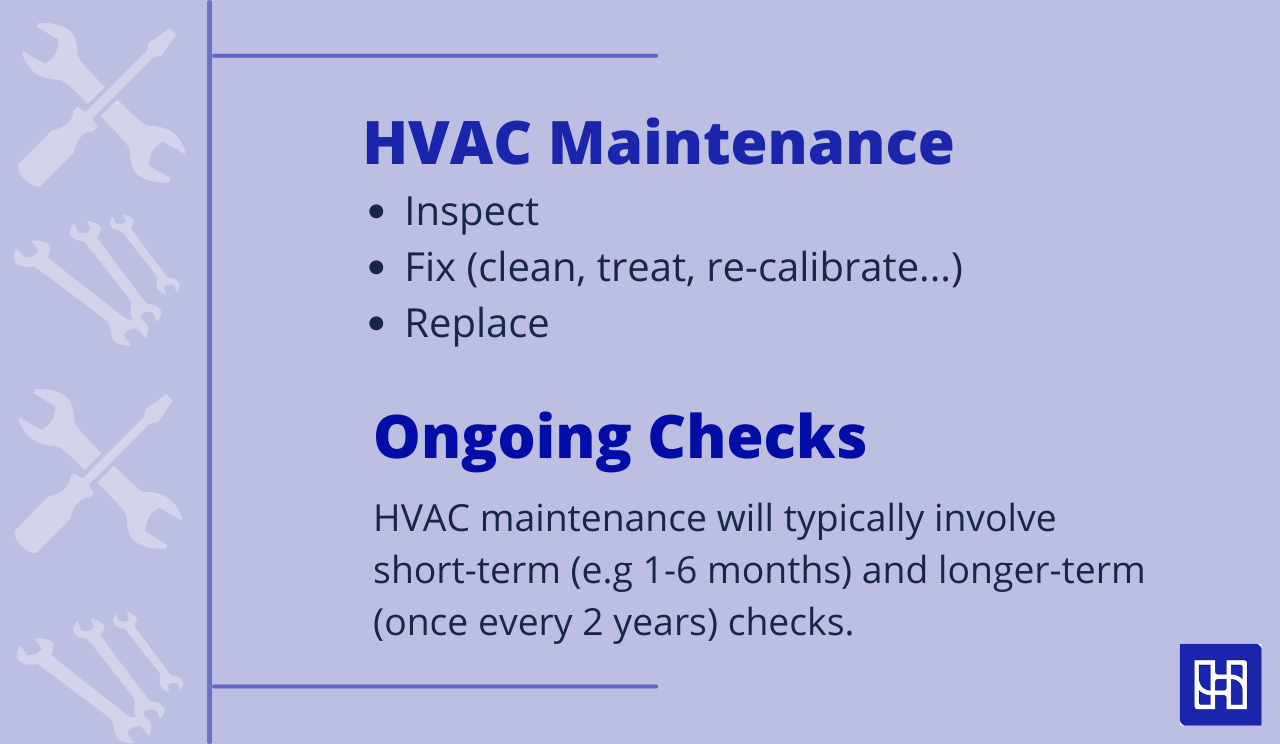
Operating environmental equipment in a commercial grow is not a “set it and forget it” process. It is an ongoing operational responsibility that requires specialized maintenance, diagnostics, and system oversight.
A typical cultivation facility must continuously manage:
- filter replacement to maintain airflow capacity (CFM)
- coil cleaning to maintain heat transfer efficiency
- condensate drain maintenance
- refrigerant pressure diagnostics
- sensor calibration
- fan performance monitoring
- vibration analysis
- control system troubleshooting
- compressor health monitoring
Over time, these systems accumulate dust, organic matter, and microbial growth. In cannabis cultivation environments, warm humid air constantly passes across evaporator coils and drain pans—creating ideal conditions for microbial growth.
Without regular cleaning, coils and drain pans can harbor mold, fusarium, botrytis, and other biological contaminants that may circulate through the facility if left unmanaged.
Maintenance is not simply about protecting equipment. It is about protecting the crop environment.
Filters: Protecting Airflow and System Efficiency
Air filters are the first line of defense in HVAC systems.
Filters capture dust, organic debris, and airborne contaminants before they enter the system. However, as filters load with debris, airflow begins to drop.
Reduced airflow causes several problems:
- reduced cooling and dehumidification capacity
- higher fan energy consumption
- increased coil fouling
- unstable environmental control
Filters must be inspected regularly and replaced on a predictable schedule. Maintaining proper airflow through the system ensures that environmental equipment can deliver the airflow volumes required to control temperature and humidity effectively.
Coil Cleaning and Microbial Risk
Evaporator and condenser coils are responsible for transferring heat between air and refrigerant. When coils accumulate dust, biofilm, or microbial growth, heat transfer efficiency declines.
In grow rooms, evaporator coils operate continuously in warm, humid conditions. This environment can support mold and fungal growth if coils are not cleaned regularly.
Dirty coils lead to:
- reduced system capacity
- increased compressor runtime
- higher energy consumption
- potential microbial contamination
Routine coil cleaning restores system efficiency and reduces the risk of biological contamination within the air handling system.
Drain pans and condensate lines must also be cleaned and maintained to prevent blockage and microbial growth.
Monitoring Fans, Compressors, and Mechanical Health
Airflow fans and compressors are the mechanical heart of HVAC systems.
Fans must deliver consistent airflow across coils and throughout the cultivation space. Over time, bearings wear, motors lose efficiency, and vibration increases.
Monitoring fan vibration and motor performance helps detect early signs of mechanical failure before equipment stops operating.
Compressors, meanwhile, operate under high pressure and heavy load. Monitoring refrigerant pressures and compressor performance can reveal early signs of inefficiency or mechanical stress.
These diagnostics help identify problems before catastrophic failures occur.
Without this level of monitoring, failures often appear suddenly—typically during periods of peak environmental demand.
Sensor Calibration and Controls
Environmental sensors guide every decision made by the control system.
If temperature, humidity, or pressure sensors drift out of calibration, the system may operate incorrectly. Incorrect sensor readings can lead to poor humidity control, improper cooling cycles, or inefficient system operation.
Sensor calibration is a routine but critical part of HVAC maintenance.
Control systems themselves can also become sources of frustration in cultivation environments. Improper configuration, conflicting setpoints, or poorly tuned control loops can create unstable environmental behavior.
Anyone who has managed a cultivation facility understands the reality:
controls troubleshooting can quickly become a full-time job.
The True Cost of HVAC Ownership
Maintaining HVACD systems requires:
- specialized technicians
- ongoing inspections
- mechanical repairs
- component replacement
- emergency service calls
Common repairs include:
- fan motor replacements
- compressor replacements
- sensor replacements
- valve replacements
- control system troubleshooting
These events are not rare. They are simply part of operating mechanical infrastructure.
For many cultivation facilities, HVAC maintenance becomes an ongoing operational burden that requires both technical expertise and constant attention.
Climate as a Service: Removing the Burden
Climate as a Service (CaaS) changes the relationship between cultivation operators and environmental infrastructure.
Instead of owning and maintaining HVAC equipment themselves, cultivators receive a fully managed environmental system as a service.
Under the CaaS model, Harvest Integrated provides:
- regular coil cleaning
- filter replacement programs
- condensate system maintenance
- compressor diagnostics
- fan vibration monitoring
- sensor calibration
- 24/7 environmental monitoring
- preventative maintenance and service response
Major component failures—such as compressors, fans, and coils—are covered within the service structure.
This model eliminates unexpected repair costs while ensuring that environmental systems are maintained at peak performance.
Maintenance Enables Environmental Control
Environmental control is only possible when the mechanical systems responsible for delivering that control are functioning properly.
When maintenance is neglected, system performance gradually declines. Airflow drops, coils foul, sensors drift, and environmental stability becomes increasingly difficult to maintain.
Eventually, cultivation teams find themselves constantly reacting to environmental problems rather than proactively managing the crop.
Consistent maintenance prevents this cycle.
Through continuous monitoring, preventative service, and rapid response to mechanical issues, climate systems remain stable and predictable.
The Bottom Line
Every cultivation facility depends on HVACD infrastructure.
The question is not whether these systems require maintenance—they always do.
The real question is who carries the responsibility.
Owning HVAC equipment means accepting the operational burden of maintaining complex mechanical systems. Climate as a Service removes that burden by providing professionally managed environmental infrastructure designed to maintain consistent growing conditions.
For cultivators, that means fewer mechanical headaches, fewer unexpected repair costs, and greater confidence that the climate systems supporting the crop are operating exactly as they should.
Because in commercial cannabis cultivation, environmental consistency drives crop success.
And environmental consistency starts with maintenance.